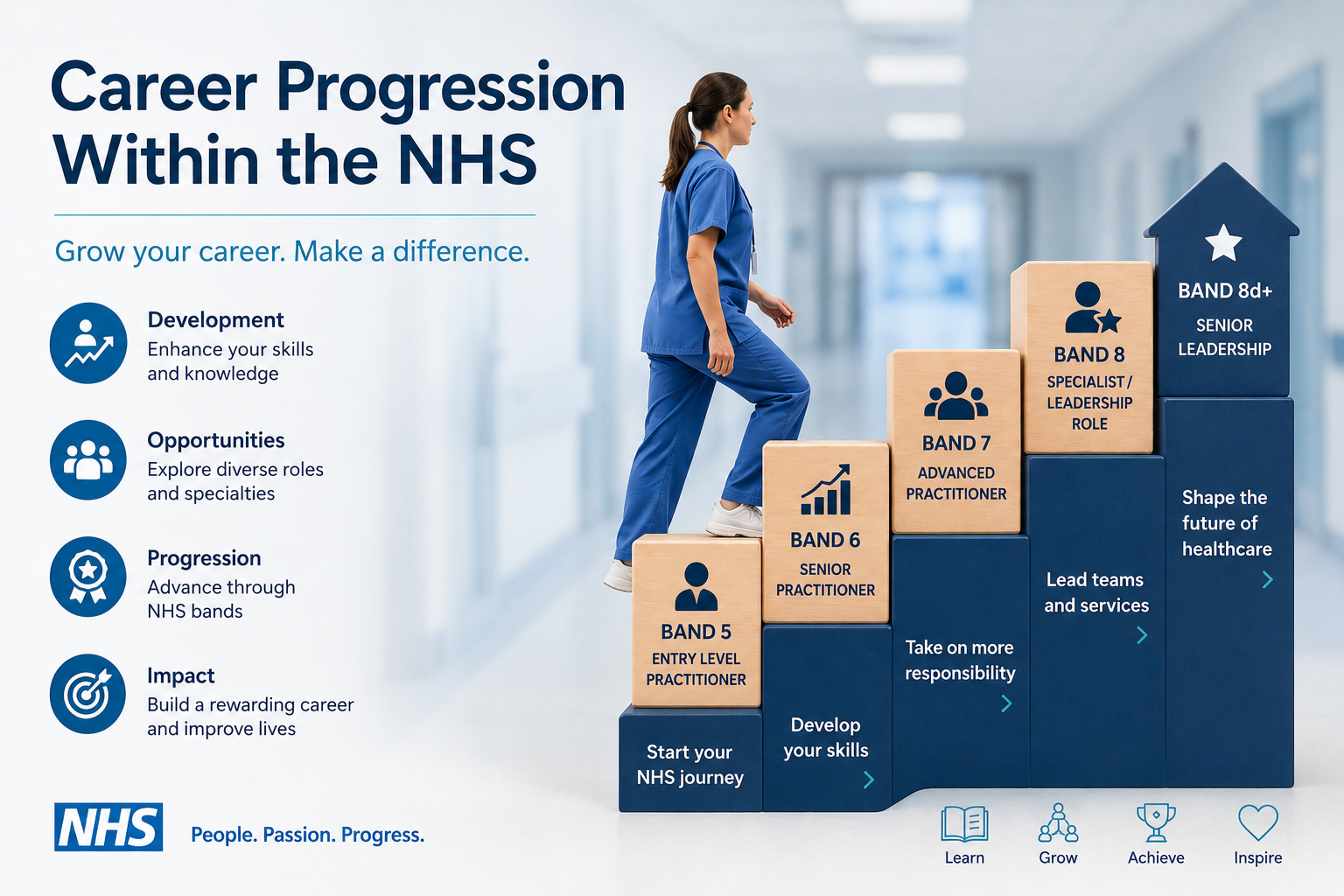
Career Progression Within the NHS
Career Progression Within the NHS: Building a Rewarding Future in Healthcare
The National Health Service (NHS) is one of the largest employers in the world, offering a wide range of career opportunities for healthcare professionals and support staff. Beyond providing stable employment, the NHS is known for its commitment to staff development, continuous learning, and clear career progression pathways. Whether you are newly qualified, internationally recruited, or already established in your profession, the NHS provides numerous opportunities to grow and advance your career.
Understanding NHS Career Pathways
One of the greatest advantages of working within the NHS is the structured approach to career development. Employees are encouraged to enhance their skills, gain new qualifications, and take on greater responsibilities as they progress through their careers.
For many clinical and non-clinical roles, career progression follows the NHS Agenda for Change pay band system. As professionals gain experience, demonstrate competence, and undertake additional training, they may become eligible for higher-band positions with increased responsibilities and remuneration.
Professional Development Opportunities
The NHS places significant emphasis on Continuing Professional Development (CPD). Staff members have access to various learning opportunities, including:
Professional training programmes
Leadership and management courses
Clinical specialisation pathways
Apprenticeships and funded qualifications
Research and innovation projects
Mentorship and coaching programmes
These opportunities enable employees to remain current with industry developments while building the skills necessary for career advancement.
Advancing Through Clinical Roles
Healthcare professionals often begin their NHS careers in entry-level or junior positions before progressing into specialist, senior, and leadership roles.
For example:
Nurses may progress from Staff Nurse positions to Senior Nurse, Clinical Nurse Specialist, Matron, or Director of Nursing roles.
Allied Health Professionals can move into advanced clinical practice, specialist services, service management, or consultancy positions.
Biomedical Scientists may progress into specialist, senior, principal, and laboratory management roles.
Radiographers, Physiotherapists, Occupational Therapists, and other professionals have similar structured progression pathways.
Specialisation often allows professionals to develop expertise in specific areas while increasing their professional influence and earning potential.
Leadership and Management Opportunities
The NHS actively encourages staff to develop leadership capabilities. Employees interested in management can pursue roles such as:
Team Leader
Service Manager
Department Manager
Clinical Lead
Head of Service
Executive Leadership Positions
Leadership programmes help staff build strategic, operational, and people-management skills required to lead healthcare services effectively.
The Importance of Networking and Mentorship
Career progression is not solely dependent on qualifications. Building professional relationships and seeking mentorship can significantly enhance career development.
Engaging with colleagues, attending professional conferences, joining professional associations, and participating in networking events can provide valuable insights into emerging opportunities and career pathways.
Mentors can offer guidance, support, and practical advice that helps professionals navigate career challenges and achieve their goals more effectively.
Setting Career Goals
Successful career progression begins with a clear plan. Professionals should regularly assess their skills, identify areas for improvement, and establish both short-term and long-term career objectives.
Questions to consider include:
What specialist area interests me most?
What qualifications or certifications could strengthen my profile?
What leadership opportunities are available within my organisation?
How can I expand my professional network?
Having a structured development plan can help transform career ambitions into achievable milestones.
Opportunities for International Healthcare Professionals
International healthcare professionals play a vital role within the NHS workforce. Many NHS organisations offer support programmes designed to help overseas recruits adapt to the UK healthcare environment and achieve long-term career success.
With dedication, professional development, and a commitment to excellence, internationally recruited staff can progress into senior clinical, specialist, and leadership positions throughout the NHS.
Conclusion
Career progression within the NHS offers far more than salary advancement. It provides healthcare professionals with opportunities to develop expertise, improve patient care, assume leadership responsibilities, and build fulfilling long-term careers. By embracing continuous learning, seeking mentorship, and taking advantage of development opportunities, NHS employees can unlock their full potential and achieve lasting professional success.
The National Health Service (NHS) is one of the largest employers in the world, offering a wide range of career opportunities for healthcare professionals and support staff. Beyond providing stable employment, the NHS is known for its commitment to staff development, continuous learning, and clear career progression pathways. Whether you are newly qualified, internationally recruited, or already established in your profession, the NHS provides numerous opportunities to grow and advance your career.
Understanding NHS Career Pathways
One of the greatest advantages of working within the NHS is the structured approach to career development. Employees are encouraged to enhance their skills, gain new qualifications, and take on greater responsibilities as they progress through their careers.
For many clinical and non-clinical roles, career progression follows the NHS Agenda for Change pay band system. As professionals gain experience, demonstrate competence, and undertake additional training, they may become eligible for higher-band positions with increased responsibilities and remuneration.
Professional Development Opportunities
The NHS places significant emphasis on Continuing Professional Development (CPD). Staff members have access to various learning opportunities, including:
Professional training programmes
Leadership and management courses
Clinical specialisation pathways
Apprenticeships and funded qualifications
Research and innovation projects
Mentorship and coaching programmes
These opportunities enable employees to remain current with industry developments while building the skills necessary for career advancement.
Advancing Through Clinical Roles
Healthcare professionals often begin their NHS careers in entry-level or junior positions before progressing into specialist, senior, and leadership roles.
For example:
Nurses may progress from Staff Nurse positions to Senior Nurse, Clinical Nurse Specialist, Matron, or Director of Nursing roles.
Allied Health Professionals can move into advanced clinical practice, specialist services, service management, or consultancy positions.
Biomedical Scientists may progress into specialist, senior, principal, and laboratory management roles.
Radiographers, Physiotherapists, Occupational Therapists, and other professionals have similar structured progression pathways.
Specialisation often allows professionals to develop expertise in specific areas while increasing their professional influence and earning potential.
Leadership and Management Opportunities
The NHS actively encourages staff to develop leadership capabilities. Employees interested in management can pursue roles such as:
Team Leader
Service Manager
Department Manager
Clinical Lead
Head of Service
Executive Leadership Positions
Leadership programmes help staff build strategic, operational, and people-management skills required to lead healthcare services effectively.
The Importance of Networking and Mentorship
Career progression is not solely dependent on qualifications. Building professional relationships and seeking mentorship can significantly enhance career development.
Engaging with colleagues, attending professional conferences, joining professional associations, and participating in networking events can provide valuable insights into emerging opportunities and career pathways.
Mentors can offer guidance, support, and practical advice that helps professionals navigate career challenges and achieve their goals more effectively.
Setting Career Goals
Successful career progression begins with a clear plan. Professionals should regularly assess their skills, identify areas for improvement, and establish both short-term and long-term career objectives.
Questions to consider include:
What specialist area interests me most?
What qualifications or certifications could strengthen my profile?
What leadership opportunities are available within my organisation?
How can I expand my professional network?
Having a structured development plan can help transform career ambitions into achievable milestones.
Opportunities for International Healthcare Professionals
International healthcare professionals play a vital role within the NHS workforce. Many NHS organisations offer support programmes designed to help overseas recruits adapt to the UK healthcare environment and achieve long-term career success.
With dedication, professional development, and a commitment to excellence, internationally recruited staff can progress into senior clinical, specialist, and leadership positions throughout the NHS.
Conclusion
Career progression within the NHS offers far more than salary advancement. It provides healthcare professionals with opportunities to develop expertise, improve patient care, assume leadership responsibilities, and build fulfilling long-term careers. By embracing continuous learning, seeking mentorship, and taking advantage of development opportunities, NHS employees can unlock their full potential and achieve lasting professional success.